Walks

National Mall

National Mall cover picture
3 mi (4 km)< 1 monthShort1 sections13 walking now

About this walk

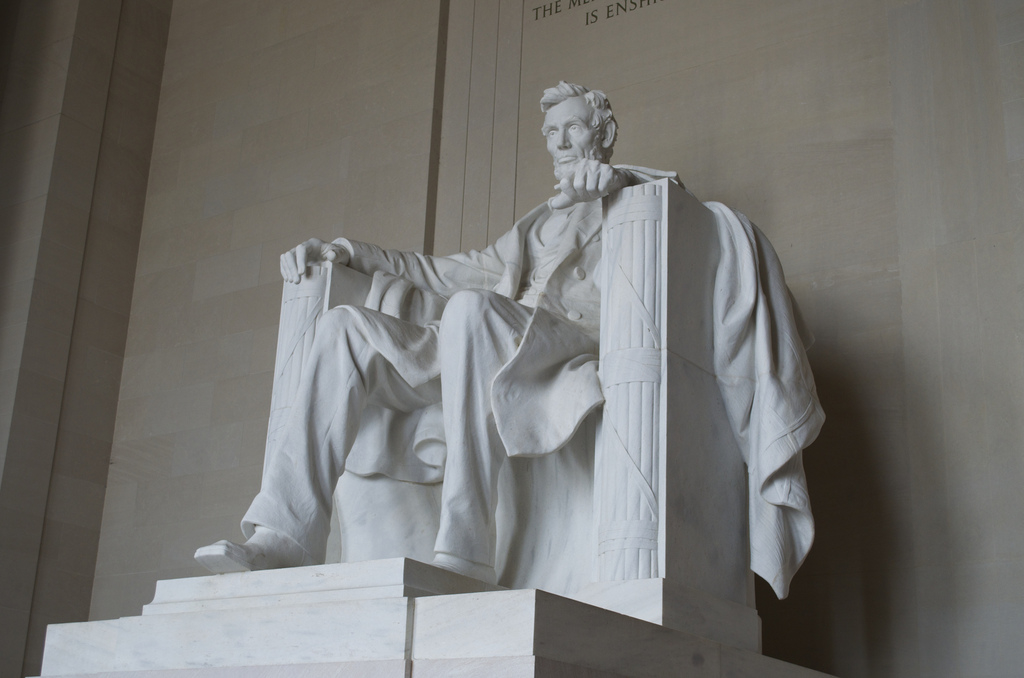
Discover the heart of Washington, D.C. on the National Mall walking route, a picturesque 4 km, 3 mi journey through history and inspiration. On this historic journey you will pass by the towering Washington Monument and wander through serene Constitution Gardens as well as pay homage at the World War II, Vietnam and Korean War Memorial. Take a moment at the shimmering Reflecting Pool before heading to the grand Lincoln Memorial. Conclude your walk at the Thomas Jefferson memorial. A walk rich in heritage and scenic beauty!

Route outline

  1. Washington National Monument · mile 0
  2. Thomas Jefferson Memorial · mile 3

The first stories on the trail

Each checkpoint on the trail has a story that opens in the app when you reach it. Here are the first 3.

Washington National Monument

Dedicated on February 21, 1885, the Washington Monument was constructed to honor George Washington, the ''Father of our Country,'' who led U.S. troops against the British in the Revolutionary War and was elected unanimously to become the first president of the United States.

Construction of this memorial took over 35 years from the ceremonious cornerstone laying on July 4, 1848, to completion. Construction started in 1848, but later halted in 1856 due to lack of funding. In 1876, President Grant approved the funding to complete the monument. At the time of opening in 1884, the Washington Monument was the tallest structure in the world. It was replaced by the Eiffel Tower in 1889. Today the monument still holds the record for the world's largest stone structure, and the largest structure in Washington D.C. Since the construction took place over such a long time, different hues of marble had to be used. A visitor will see that the lower 156 feet is a slightly different color than the rest of the monument. The Washington Monument's capstone is made out of aluminum, a newly discovered and expensive metal back then. After the construction of the capstone, but prior to installing it at the top of the monument, the capstone was placed on the floor of Tiffany's in New York City, so that people could jump over it. Since the dedication of this memorial in 1885, an elevator has been added to bring visitors to the top. Today, visitors can obtain free tickets from the Washington Monument Lodge to ride the elevator 500 feet up to the top and enjoy panoramic views of the city. I hope you enjoy the rest of your journey exploring the memorials scattered across the National Mall. National Mall and Memorial Park annually hosts more than twenty five million visitors from all around the world. Information for this walk and additional information is available on the National Park Service website: www.nps.gov or via the National Park Services Android App.


World War II Memorial

Dedicated in 2004, the World War II memorial is one of three war memorials in the National Mall. Though often thought of as a memorial for veterans, this memorial is also dedicated to the women and civilian workers that contributed to the war effort. On the west side of the memorial is a wall with 4,048 gold stars, each representing 100 soldiers killed or missing in the war. During the war, when a soldier went off to battle, the soldier's family would put up a flag in their window of a blue star with a white field and a red border. If news arrived of the death of the soldier, the family would replace the blue star with a gold one, signifying the sacrifice the family has made to the war.

Aligned with the gold stars in a circle are 56 columns representing each of the 48 states (Alaska and Hawaii were not states during this time period) and 8 territories that the U.S. owned. The states are arranged following the traditional military formation, with the gold stars in the middle, and the state with the highest seniority or rank, Delaware, located to its right. The second state, Pennsylvania, is immediately to the left of the gold stars. Back and forth all the columns are placed by order of the date they joined the Union with the non-state territories located last on the east side of the memorial. Two large victory pavilions are located north and south of the memorial, representing the Pacific and the Atlantic, the two theatres of war.

Also part of the memorial, but much less obvious, are 2 drawings of ''Kilroy was here''. J.J. Kilroy was a ship inspector in Massachusetts. To avoid other people taking credit for his work, he marked the ships he inspected with a picture of a man looking over a fence with the words ''Kilroy was here.'' American soldiers, who saw the picture on the ships but didn't know where it came from, started redrawing the picture everywhere they went, turning the cartoon originally drawn to mark inspections on ships to a mark that signified where the American forces had been. The Germans had no idea who Kilroy was, and after seeing all the markings throughout the war, thought Kilroy was some kind of super spy that went anywhere he pleased.

Reflecting Pool

Built in the 1920's, the reflecting pool held still water with no current or ripples. This allowed the undisturbed water to be reflective. In 2010, they started construction on the pool to introduce circulating water from the Tidal Basin, rather than using potable water. Circulating the water helps with the dirt and bacteria that build up as a result of non-moving water. The renovated reflecting pool opened on August 31, 2012.

This pool is featured in the popular 1994 film Forrest Gump in the iconic scene where Jenny wades through (on the Lincoln Memorial side) to reach Forrest Gump during a Vietnam War peace rally.

The rest of the stories open in the app as you walk.

Walk the National Mall with Walk The Distance, on iPhone and Android

Download on the App StoreGet it on Google Play

Want to walk it with your team? See how walking challenges for groups work.

More trails